
Play Therapy
Understanding Your Child Through Play
Play therapy is purposeful, evidence-based support designed for how children grow and heal.
New to play therapy? Learn what is is (and isn't).

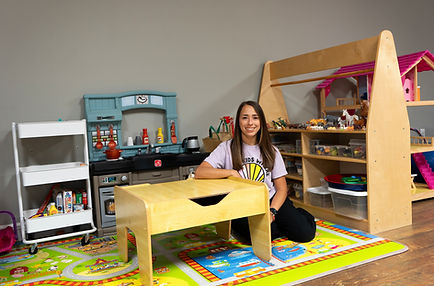
Welcome to the Playroom
The playroom is an intentionally curated space, not just a “fun room,” but a therapeutic environment where your child feels safe to explore their inner world.
Inside, your child may engage with:
-
Dolls, action figures, and puppets
-
Art materials for creative expression
-
Sand trays and sensory materials
-
Games and role-play props
-
Books and storytelling tools
Every item is chosen to support emotional expression, imagination, and healing, allowing your child to communicate in the language they know best.


Your Child’s Growth Begins With Play
If you’re curious about whether play therapy might be the right fit for your child or family, I’d love to talk more with you. 💛

Why Play Therapy Helps Children
Children often don’t yet have the words to describe big emotions or confusing experiences.
Play allows them to:
-
Express feelings safely without pressure to “talk about it”
-
Process stress, transitions, or trauma in a way that feels natural
-
Build emotional regulation and coping skills
-
Strengthen confidence and problem-solving skills
-
Practice healthy social and emotional interaction
Because a child leads the play, they feel respected and heard — which supports healing and growth from the inside out. (ADPCA)

At Hughes Counseling Services, I create a safe, supportive space tailored to your child’s unique needs, where they can explore, express, and grow at their own pace.
This support is woven into each session through:
-
Child-centered play that builds confidence and independence
-
Reflective responses that help your child feel understood
-
Play that supports emotional awareness and expression
-
Creative expression through art, storytelling, and symbolic play
-
Collaboration with parents to support progress beyond sessions

Common Questions:
Is play therapy just playing?
No — while it looks like play, it’s purposeful and structured by a trained therapist to help children express, process, and make meaning of their experiences.
How will I know if it’s working?
Changes may show up in your child’s emotional awareness, behavior at home or school, littler moments of confidence, or through ongoing parent consultations. Progress looks different for every child.
Will I be involved?
Yes — parent support and collaboration are key. We work together so that gains made during sessions continue at home and in daily life.
What ages benefit from play therapy?
Play therapy is especially effective for young children (often ages 3–10), though it can be adapted based on developmental needs.
Is it only for serious problems?
Play therapy helps with big issues and everyday emotional growth — anxiety, transitions, loss, school challenges, confidence building, social skills, and more.